Jul 03, 2026
Introduction
The Earth's oceans remain one of the least explored frontiers of scientific discovery. Hidden beneath the icy waters surrounding Antarctica are thousands of unique marine organisms that have evolved remarkable survival strategies in one of the planet's harshest environments.
Now, these extraordinary adaptations may offer something even more valuable: new weapons against cancer.
Recent biomedical research has identified bioactive compounds produced by Antarctic marine organisms that show promise in the fight against melanoma, one of the deadliest forms of skin cancer. While these discoveries are still in the research stage, they highlight the growing importance of marine biology in drug discovery and the search for next-generation cancer therapies.
Why Scientists Are Looking to the Ocean
More than 70% of Earth's surface is covered by oceans, yet only a small fraction of marine species has been thoroughly studied.
Unlike terrestrial organisms, marine animals often produce highly specialized chemical compounds to survive extreme conditions, defend against predators, or compete for space and resources.
These naturally occurring molecules have attracted increasing interest because many possess:
Anti-inflammatory properties
Antibacterial activity
Antiviral effects
Anticancer potential
Over the past two decades, several approved medicines—including treatments for cancer and chronic pain—have originated from marine organisms.
This success has encouraged researchers to explore even more remote ecosystems, including Antarctica.
Why Antarctica Is a Unique Natural Laboratory
Antarctic waters are among the coldest, darkest, and most nutrient-rich marine environments on Earth.
To survive these extreme conditions, organisms have evolved unique biochemical pathways that are rarely found elsewhere.
Scientists are particularly interested in organisms such as:
Sea squirts (tunicates)
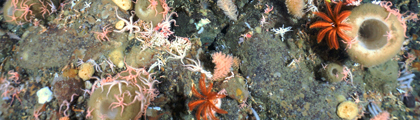
Sponges
Soft corals
Bryozoans
Marine bacteria
Microalgae
Many of these species produce complex molecules that help them survive environmental stress and resist microbial infections.
These same molecules may also influence human biological pathways involved in cancer development.
Tiny Sea Creatures, Big Scientific Potential
Among the most promising discoveries are compounds isolated from Antarctic sea squirts.
Sea squirts are simple filter-feeding marine animals, but they produce a remarkable variety of natural chemicals.
Laboratory studies suggest that some of these compounds can:
Slow the growth of melanoma cells
Trigger programmed cancer cell death (apoptosis)
Reduce tumor cell proliferation
Interfere with cancer-related signaling pathways
Although these findings remain at the preclinical stage, they provide valuable starting points for developing new anticancer drugs.
Researchers emphasize that these molecules are not treatments themselves but serve as templates that medicinal chemists can optimize for future therapies.
Why Melanoma Remains a Major Challenge
Melanoma develops when pigment-producing cells, known as melanocytes, become cancerous.
Although melanoma accounts for a smaller proportion of skin cancer cases, it is responsible for the majority of skin cancer deaths because it can spread rapidly to other organs.
Modern therapies—including immunotherapy and targeted drugs—have significantly improved survival rates.
However, several challenges remain:
Drug resistance
Tumor recurrence
Variable patient responses
Limited treatment options for advanced disease
These challenges continue to drive the search for entirely new classes of anticancer compounds.
Marine natural products represent one promising avenue of exploration.
From Marine Biology to Drug Discovery
Transforming a marine compound into an approved medicine is a long and highly regulated process.
The journey typically includes:
Discovering a biologically active molecule.
Identifying its chemical structure.
Testing its activity in laboratory experiments.
Optimizing the compound for safety and effectiveness.
Conducting animal studies.
Performing clinical trials in humans.
Only a small percentage of promising molecules ultimately become approved medicines.
Nevertheless, every successful drug begins with a scientific discovery.
The Growing Role of Marine Drug Discovery
Marine drug discovery has become one of the fastest-growing fields in biomedical research.
Advances in genomics, artificial intelligence, and analytical chemistry now allow scientists to identify promising natural compounds more efficiently than ever before.
Researchers increasingly combine:
Marine biology
Computational chemistry
Structural biology
Artificial intelligence
Precision medicine
This multidisciplinary approach is accelerating the search for future cancer therapies while reducing the time required to identify promising drug candidates.
Scientific Visualization Helps Communicate Complex Discoveries
Research involving marine natural products often spans multiple scientific disciplines, including ecology, chemistry, molecular biology, pharmacology, and oncology.
Communicating these complex relationships through text alone can be challenging.
Scientific illustrations, graphical abstracts, and mechanism diagrams help researchers explain:
Marine organism habitats
Chemical compound structures
Cellular signaling pathways
Drug-target interactions
Cancer inhibition mechanisms
Well-designed scientific visuals not only improve reader understanding but also enhance the clarity and impact of research publications.
Looking Ahead
The icy waters surrounding Antarctica continue to reveal remarkable biological diversity with enormous scientific potential.
Although much work remains before marine-derived compounds become routine cancer treatments, recent discoveries demonstrate that nature still holds countless opportunities for medical innovation.
As technologies such as artificial intelligence, genomic sequencing, and marine biotechnology continue to advance, scientists are discovering new ways to transform unusual marine chemistry into life-saving medicines.
The next breakthrough in melanoma treatment may come not from a traditional laboratory—but from one of the most remote ecosystems on Earth.
Conclusion
Marine organisms have already inspired several important medicines, and Antarctic biodiversity may provide the next generation of anticancer compounds.
Research into melanoma treatments derived from Antarctic sea life illustrates how marine biology and drug discovery are becoming increasingly interconnected.
While these discoveries remain in the early stages of development, they reinforce an important lesson: protecting Earth's oceans is not only essential for biodiversity but may also be critical for the future of human health.
Continued investment in marine science, biomedical research, and international collaboration will be vital as scientists explore one of medicine's most promising frontiers.
EN SAVOIR PLUS

 +86 17354022649
 service@sondii.com


 IPv6 RÉSEAU PRIS EN CHARGE