
The COVID-19 pandemic transformed the way scientists develop vaccines. Technologies that once required years of research are now being accelerated through artificial intelligence (AI), machine learning, and computational biology.
Today, researchers around the world are pursuing one of the most ambitious goals in immunology: developing a universal coronavirus vaccine capable of protecting against not only current SARS-CoV-2 variants but also future coronavirus outbreaks.
While no universal coronavirus vaccine has yet reached widespread clinical use, recent advances suggest that AI is becoming an essential tool in making this long-term objective more achievable.
But how exactly can AI contribute to vaccine development?
Current COVID-19 vaccines have saved millions of lives by significantly reducing severe disease and mortality.
However, coronaviruses evolve rapidly.
New variants may partially evade existing immune protection, requiring updated vaccine formulations and booster campaigns.
A universal coronavirus vaccine aims to provide broader and longer-lasting protection by targeting viral regions that remain relatively stable across different coronavirus strains.
Such a vaccine could potentially protect against:
SARS-CoV-2 variants
SARS-CoV
MERS-CoV
Future zoonotic coronaviruses
Rather than responding to each new outbreak individually, scientists hope to develop a vaccine capable of preparing humanity for future pandemics.
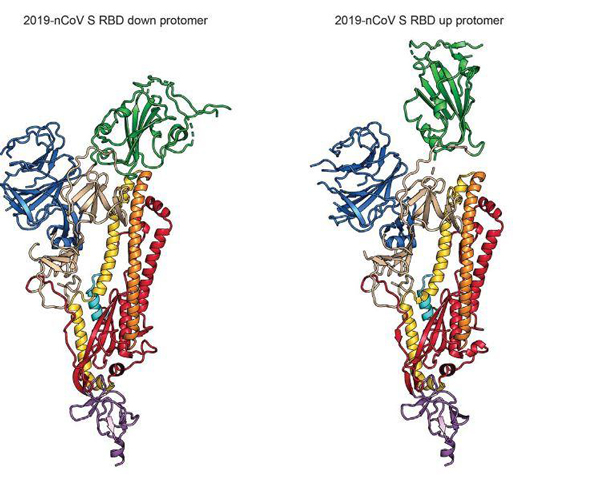
Artificial intelligence is transforming nearly every stage of vaccine development.
Instead of relying solely on traditional laboratory screening, researchers can now analyze enormous biological datasets in a fraction of the time.
AI supports vaccine research by helping scientists:
Machine learning models analyze thousands of viral genome sequences to identify regions that remain stable despite mutation.
These conserved regions are ideal targets for universal vaccines because they are less likely to change over time.
Not every viral protein generates a strong immune response.
AI algorithms can predict which epitopes are most likely to activate B cells and T cells, helping researchers prioritize the most promising vaccine candidates.
This significantly reduces the number of laboratory experiments required.
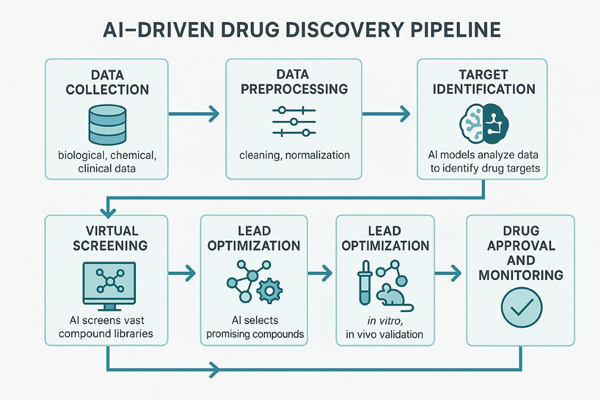
Modern vaccine development often involves evaluating millions of possible antigen combinations.
AI can rapidly compare these combinations based on structural stability, immunogenicity, and safety predictions.
Instead of manually testing every possibility, scientists can focus on candidates with the highest probability of success.
AI also supports later stages of vaccine development through:
Clinical trial optimization
Patient recruitment
Biomarker discovery
Safety monitoring
Manufacturing process optimization
These applications help reduce both development time and overall costs.
Although coronavirus research has attracted significant attention, AI is already being applied across many infectious diseases.
Current research includes vaccines targeting:
Influenza
HIV
Respiratory Syncytial Virus (RSV)
Tuberculosis
Malaria
Many researchers believe that AI-assisted vaccine platforms will become standard tools for responding to future emerging infectious diseases.
Despite rapid technological progress, developing a universal coronavirus vaccine remains an enormous scientific challenge.
Coronaviruses vary considerably across species.
A vaccine must stimulate immunity against many genetically distinct viruses.
Broad protection requires carefully balancing antibody and T-cell responses.
Designing vaccines that generate durable immunity remains difficult.
AI can identify promising candidates, but laboratory experiments and clinical trials are still essential.
Computational predictions must be confirmed through biological testing.
Creating a universal vaccine requires collaboration among virologists, immunologists, structural biologists, computational scientists, and clinicians.
AI enhances collaboration—but it cannot replace scientific expertise.
As vaccine research becomes increasingly interdisciplinary, communicating complex discoveries is more important than ever.
A typical AI-assisted vaccine project may involve:
Viral evolution
Protein structures
Antigen design
Immune signaling pathways
Machine learning workflows
Clinical development
These concepts are difficult to explain using text alone.
High-quality scientific figures can transform complicated mechanisms into clear visual stories that help readers, reviewers, and collaborators understand the research more efficiently.
Graphical abstracts, mechanism illustrations, and publication-ready figures have become essential tools for communicating modern vaccine research.
Artificial intelligence is unlikely to replace vaccine scientists.
Instead, it is becoming a powerful research partner.
By combining computational prediction with experimental validation, researchers are building faster and more efficient vaccine discovery pipelines.
While a universal coronavirus vaccine is still under development, AI has already changed how scientists search for vaccine targets, optimize antigen design, and analyze immune responses.
The next pandemic may not be prevented by AI alone—but AI will almost certainly play a central role in helping researchers prepare for it.
The pursuit of a universal coronavirus vaccine represents one of the most ambitious goals in modern biomedical research.
Artificial intelligence is accelerating this effort by enabling researchers to analyze complex biological data, predict promising vaccine targets, and streamline the development process.
Although significant scientific challenges remain, AI is transforming vaccine research from a largely trial-and-error process into a more data-driven and efficient discipline.
As computational biology, immunology, and machine learning continue to converge, the future of vaccine development will likely become faster, smarter, and more collaborative than ever before.
Anhui Province Academy of Science and Technology, No. 128,Wanshui Road, Hi-Tech Zone, Hefei City, Anhui Province, China
 +86 17354022649
 service@sondii.com


 IPv6 RÉSEAU PRIS EN CHARGE
Nos horaires
Lundi 21/11 - Mer 23/11 : 9h - 20h
Jeu. 24/11 : fermé - Joyeux Thanksgiving !
Vendredi 25/11 : 8h00 - 22h00
Sam 26/11 - Dim 27/11 : 10h - 21h
(toutes les heures sont l'heure de l'Est)